
Tragedy: when the letters stop coming
No handwriting, no humanity

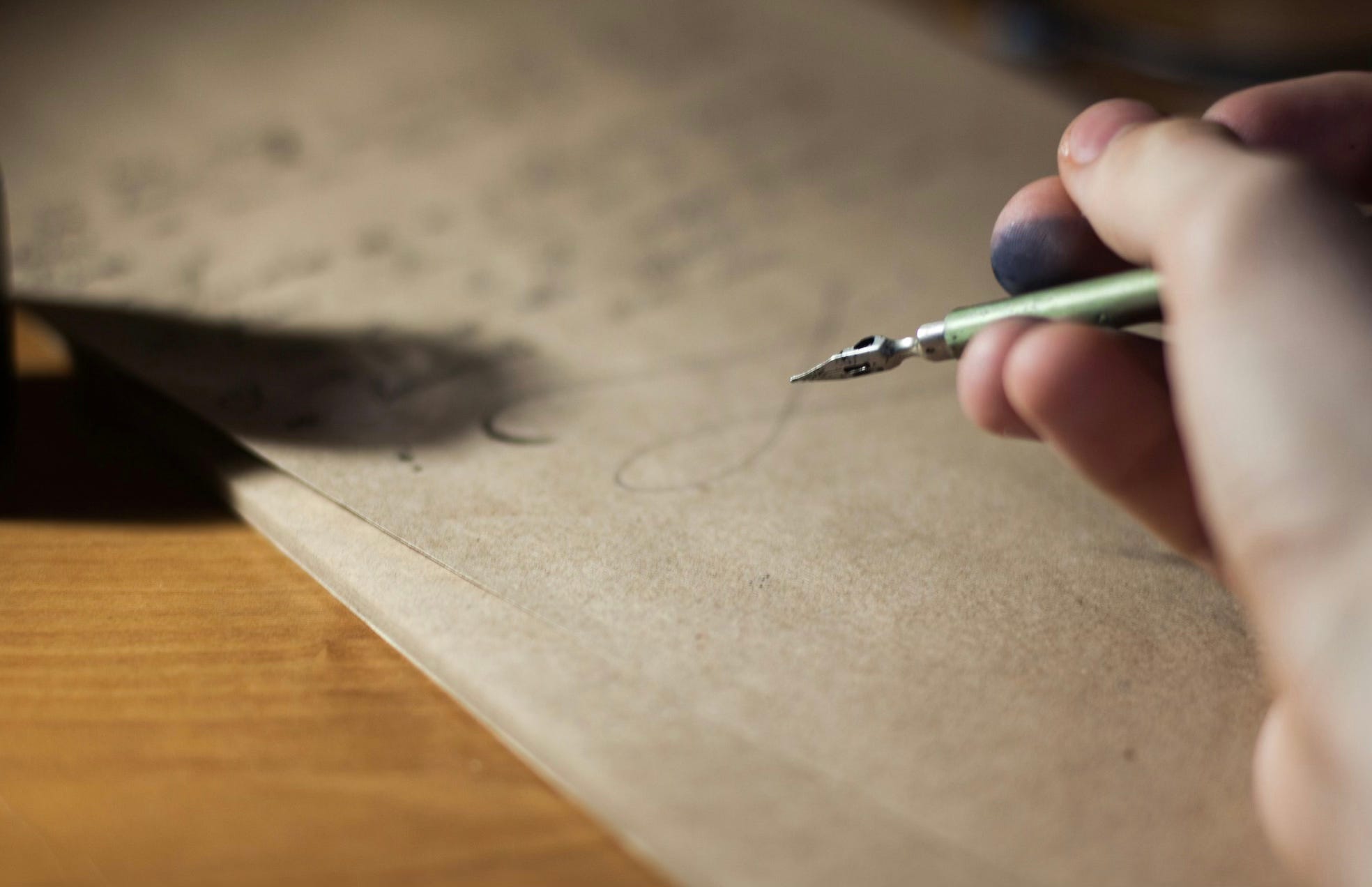
If there were a competition for world’s worst handwriting, I could have a shot at winning. There are times when even I can’t make out one of the words I’ve put onto a page. How disappointed Lady Smith Gordon would be, my grade school penmanship teacher, if she could see me now!
Lady Smith Gordon taught at the small London day school my sister and I attended in the early 1980’s. She was as proper and strict as you’d expect with such a name; she was, after all, a real lady, almost royalty. We were all a little afraid of her. I was eight and a born pleaser; I worked my cursive with the best of them to earn good marks from Lady Smith Gordon. My handwriting, in that era, was stellar.
Cut to today and my chicken scratch. I wish my writing were more legible, and sometimes I do try. But three decades of typing a lot – I’m fast and accurate – seem to have ruined me for pen-writing. And a person doesn’t need to write with a pen much in the 2020’s; this is the excuse that I and my fellow terrible handwriters make.
And yet, handwriting matters a lot, because it’s a marker of our humanity. It’s innately personal, because only one human on the planet forms letters in your unique way. Now or ever.
Within the handwriting realm, communication between individuals matters perhaps most of all: words written down for another to read. It’s an amazing journey, when you think about it: brain connects to hand, hand to pen, pen to paper, paper to other, and from there to other’s mind – and heart. A process of embodiment, connection, and relationship.
And the sense of the person that comes with it! Picture your mother’s handwriting, or your father’s or grandma’s: I bet you can. The image of it’s likely etched in your mind’s eye, even if he or she has died. Why? Because in a real way, that handwriting is a piece of who that person was. His or her thoughts and feelings mix with the words mix with the distinct markings on the paper, and together the ingredients make a powerful sort of potion. The marks were alive when the writing occurred, and they come alive again after dormancy when you pick up and read. It’s a miracle of sorts.
Typed words, uniform and mechanical, aren’t at all the same. They’re anonymous and depersonalized, and anyone’s keystrokes are identical to anyone else’s. The words and their meanings are the same, but the receiving experience is very different between the two. “The medium is the message,” as Marshall McLuhan famously said, and the medium of a typed or texted words is a far cry from a note written on paper.
I have a drawer filled with notes and letters written to me by my family members, mostly my children. I pull them out sometimes and see the words they’ve penned, the sentiments they’ve shared. Reading them is an exercise of warmth, of being heartened. In theory I could read a drawer-full of printed emails bearing the same words, but it would mean far less. The typed words would still be theirs, but the paper would not be them. A person’s essence is carried in her written words: I see my daughter when I see her handwriting. (This is one evidence that an AI is not human, by the way; an AI will never pen a letter and has no handwriting.)
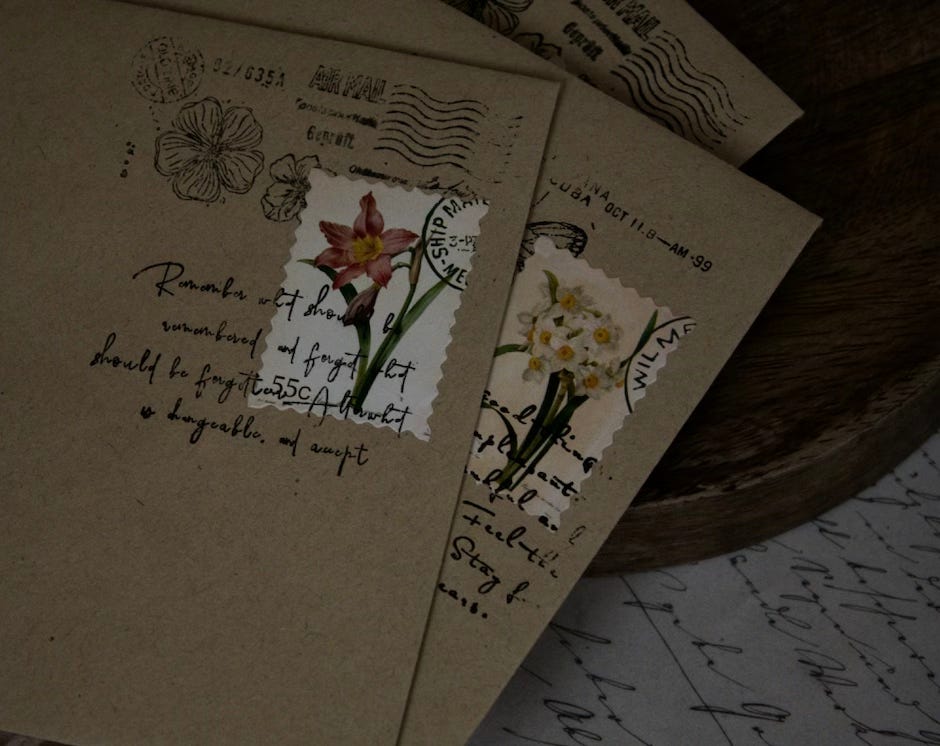
When I heard that they closed down the postal system in Denmark at the end of 2025, I was crestfallen. The country has closed the door on the personal in favor of the digital, the automated. Screens have fully triumphed over envelopes. I fear it won’t be the last country to take such a step. And it’s a tragedy.
Some will say it’s necessary, cost-saving, progress. They’ll point to the fact that written mail is down umpteen percent in the past two decades. It’s inevitable, they’ll say. Text is just data, and everything can be stored and backed up this way, they’ll say. Digitized communication is more efficient and fully searchable, they’ll say. We don’t need anything handwritten anyway, they’ll say.
I don’t buy it.
It’s a tragedy that the letters stop coming, that the mailboxes are taken down.
What does it look like to hold onto humanity in the face of a world trying to dismantle it, for the sake of productivity and utility?
Embodiment, in all its facets, is vital and retaining it is worth the fight. We’re embodied creatures, and diminishing embodied ways of being thwarts our flourishing. We lose much when we type instead of write. Friendship is impacted, because we share less of ourselves with the other when we type than handwrite. Beauty decreases – the beauty of the markings on the paper, formed by the one dear to us. Even play in its most personal form is reduced, because we have lost the stray doodles, margin notes, sketches, comic bubbles. No personalized spontaneity or creativity drops in when we tap out words in a grey phone bubble or in Calibri font on a screen. When we lose what our fingers can touch and do, we lose something essential.
So maybe the Danish postal system doesn’t “need” written mail - Grandma’s tidy script or my messy scrawl on a folded paper rectangle, affixed with a stamp - but the Danish people do. We all do. I still need what Lady Smith Gordon taught me to do, all those years ago: to write words on paper, and especially to write words for other people to read. I need it, and so do my people. Yours too.
Let’s make sure the letters don’t stop coming.